
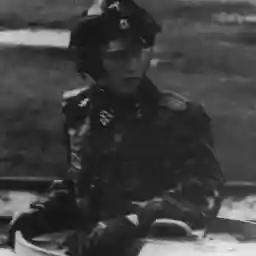
 Michael Wittmann
@TigerAceWittman
Part 4.
Michael Wittmann’s second year of army service, running from late 1935 through September 1936, remained one of routine peacetime garrison duty with the 10th Company of the 19th Infantry Regiment at Freising. Having already been promoted to Gefreiter in November 1935, he continued the same cycle of drills, physical training, weapons instruction, and combined-arms exercises that defined the regiment’s daily life. The unit was still adapting to the expanding Wehrmacht after the formal reorganisation of the Reichswehr in March 1935, so standards were high and the pace of instruction steady.
Training with the early Panzer I continued to form part of the curriculum. Wittmann and his comrades practised infantry-armour cooperation and anti-tank tactics, giving him further practical familiarity with the strengths and limitations of the light tank. Sources describe him as a reliable soldier who adapted well to the disciplined environment, though no individual combat actions or standout personal incidents are recorded for this period—it was still peacetime.
Life in the barracks followed a predictable pattern of early musters, repetitive skill drills, and collective tasks designed to build unit cohesion. Wittmann’s rural background and previous labour-service experience appear to have helped him fit into this structured setting without difficulty. The regiment remained based near Munich, so leave or contact with family in the Upper Palatinate would have been relatively straightforward when permitted.
By the summer of 1936 his two-year enlistment was drawing to a close. He completed his service honourably and was discharged at the end of September 1936 still holding the rank of Gefreiter. No special awards or disciplinary notes are attached to his army record from this second year.
Immediately after leaving the army, Wittmann took temporary work as a railway construction labourer in the Ingolstadt–Reichertshofen area, the same region where his father had earlier sought employment. The job was short-lived; within weeks he had decided to pursue a different path.
In early October 1936 he submitted an application to join the local SS unit in Ingolstadt. By 1 November he had been accepted as an SS-Anwärter into the 1st Sturm of the 92nd SS-Standarte, receiving the SS number 311623. This marked the end of his regular army service and the beginning of his association with the Schutzstaffel, setting the stage for his later transfer into the Leibstandarte.